Field 01
Phone and first contact
Answering inbound calls, capturing requests, booking appointments, coordinating callbacks. In production around the clock, including outside business hours.
The guide
A practical guide for owners and managing directors: what AI reliably delivers today, where projects fail, and how to start without burning money.
Last updated: August 3, 2026 · continuously maintained
Starting point
Few topics occupy SME leadership like artificial intelligence, and few are backed by so little reliable data. What is certain: the businesses that measurably profit did not buy the most tools. They understood first where their workflows lose time and money.
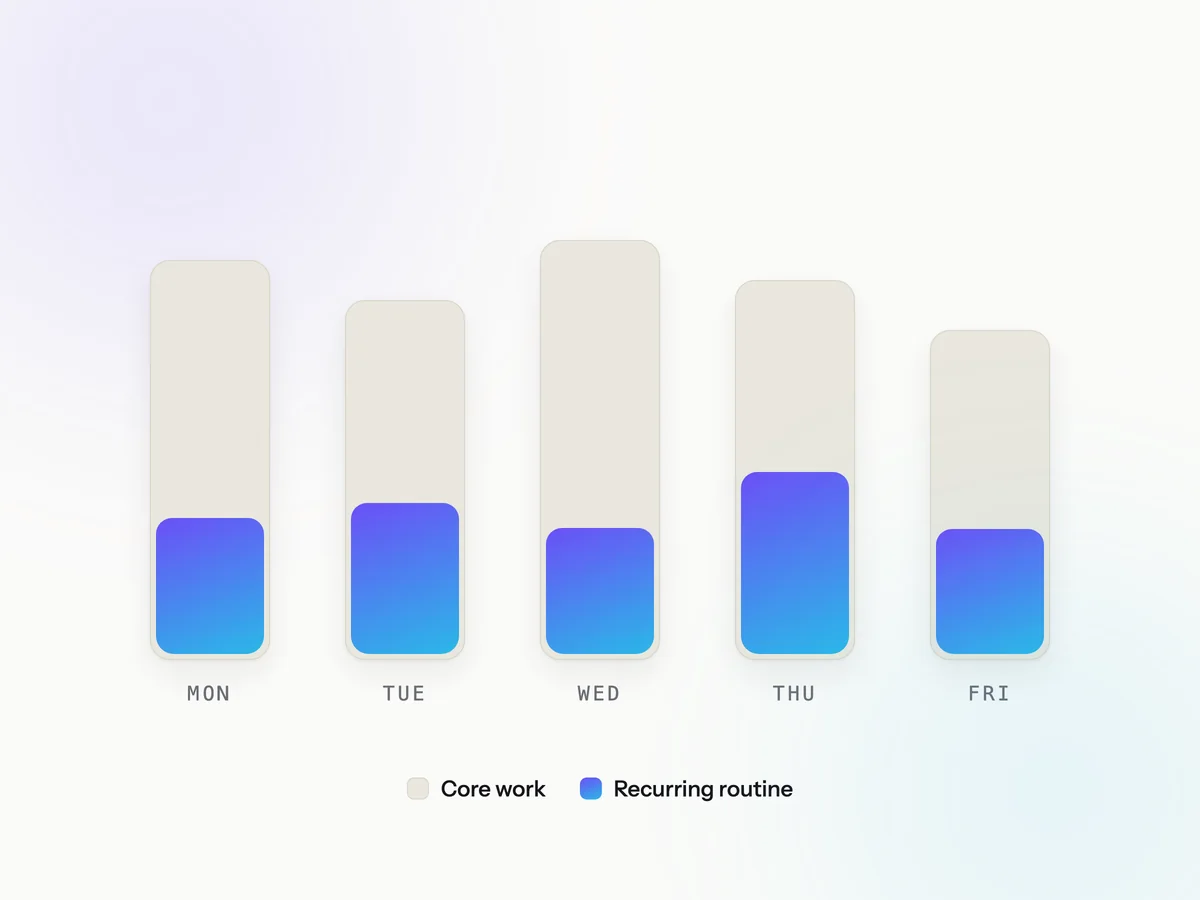
Today's AI systems are strongest at recurring work with language and documents. Four fields consistently deliver in small and medium-sized enterprises:
Field 01
Answering inbound calls, capturing requests, booking appointments, coordinating callbacks. In production around the clock, including outside business hours.
Field 02
Capturing, sorting and preparing incoming e-mails, forms and paperwork, so your team reviews instead of retyping.
Field 03
Existing knowledge becomes texts for website, newsletter and social channels, in your tone of voice, with approval before publishing.
Field 04
Handovers between systems, reports, summaries and decision preparation, with a human at every approval gate.
Reason 01
A subscription is signed quickly; a problem is rarely solved by it. If you don't know which workflow costs how much time, you cannot judge whether automating it pays off.
Reason 02
Employees already use private accounts for company data because there is no sanctioned alternative. That is not a discipline problem, it is an organizational one, and a serious data protection risk.
Reason 03
AI systems are not a one-time purchase. Without monitoring, measurement and maintenance they decay, and your team's trust decays with them.
Which workflows bind how much time, what can be automated dependably today, in what order does implementation pay off? That is what the AI audit answers: on site, standardized, with the first working solution in 28 days.
One use case that runs convinces more than ten slides about potential. The first success creates acceptance for everything that follows.
Every solution gets a metric. What pays off gets extended; what does not gets cut before it costs money.
Data protection
AI in SMEs can be run GDPR-compliant; the building blocks are known. On top of that sits the EU AI Act: employees who use AI systems need sufficient competence in handling them, and its obligations phase in in stages through 2027. Existing GDPR discipline is an asset here, not a burden. Be skeptical of anyone promising one hundred percent legal certainty; serious partners name residual risks.
Frequently asked questions
Time, first of all. Across our mandates the biggest effects come from phone-based first contact, document handling and content production. One medical specialist practice wins back about one working day per week through automated content production.
With a diagnosis, not a tool. Only when you know which workflows cost how much time can you judge where automation pays off. A structured AI audit delivers that foundation within weeks.
Recurring workflows with clear rules and high volume: inbound calls, appointment booking, inbox handling, standard documents, reporting. The clearer the workflow, the more reliable the automation.
Shadow AI means employees using AI tools privately and unregulated for company tasks. Company data ends up in systems without contracts, without oversight and partly outside Europe. The answer is not a ban list but a sanctioned, better alternative.
Yes. It takes data processing agreements, European servers for personal data, clear data rules per system and documentation. Nobody can seriously promise total legal certainty; demonstrable compliance is achievable.
Yes, with graduated obligations. Most SME use cases fall into low-risk categories, but duties like AI competence for staff apply broadly, and the Act's requirements phase in in stages through 2027. The EU explicitly provides simplified compliance paths for SMEs.
In SMEs that is the wrong question. AI takes over the recurring work nobody misses and gives people time for what drives revenue and quality. Approval of important decisions stays with humans.
Not to start. What you need is a partner who builds and operates, clear usage rules and a team that knows the new workflows. Competence grows in operation, not in seminar rooms.
Next step
A 15-minute intro call, free. You get an honest assessment, even if the next step isn't with us.
Book an intro callFree · 15 minutes · direct with the founder